
6-Research Melstrom
Measuring the value of nature
Environmental economist Max Melstrom, PhD, works to help people understand the tradeoffs involved in environmental decisions
How do you measure the value that people place on an experience like catching a smallmouth bass in a pristine lake, or watching a flock of sandhill cranes take flight over a lush wetland? As an environmental economist, Richard "Max" Melstrom, PhD, works to measure what many assume is immeasurable. He aims to quantify the value of natural resources and recreational experiences, as well as the losses people experience due to environmental damage. Melstrom's research helps policymakers and natural resource managers make more informed decisions about environmental issues.
"People don't make decisions in a vacuum. They act based on the value they get from experiences. And when the environment changes—whether it's cleaner water, fewer fish, or birds avoiding their favorite park—those experiences change too." Max Melstrom, PhD
Weighing conflicting interests
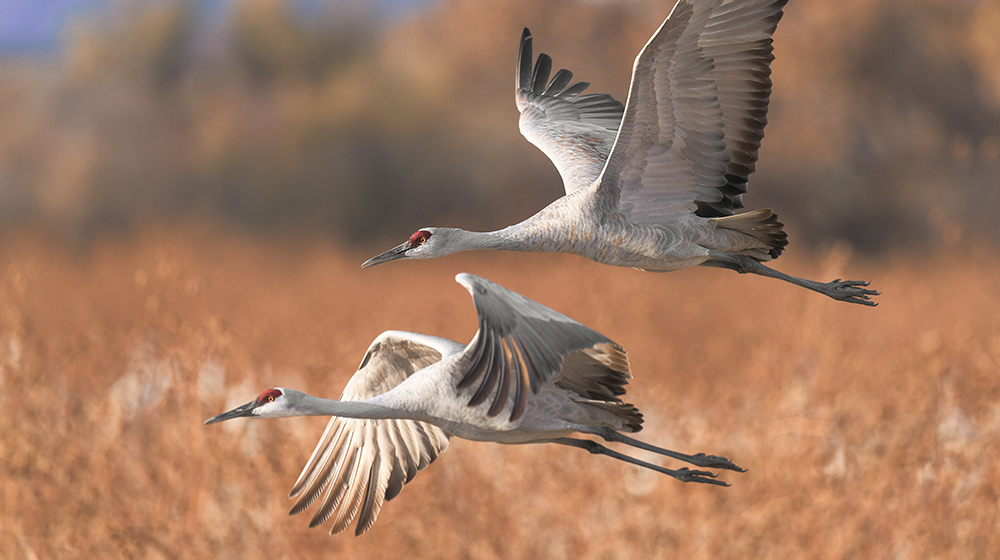
Melstrom's current work with the Indiana Department of Natural Resources (DNR) focuses on sandhill cranes. Conservation efforts have helped this once-threatened species make a remarkable comeback. Their numbers have grown to the point that hunters have approached the DNR about harvesting the birds. If the DNR allows hunting, the birds would likely respond by avoiding areas where they might encounter people. That would reduce opportunities for birders to see the large, impressive cranes.
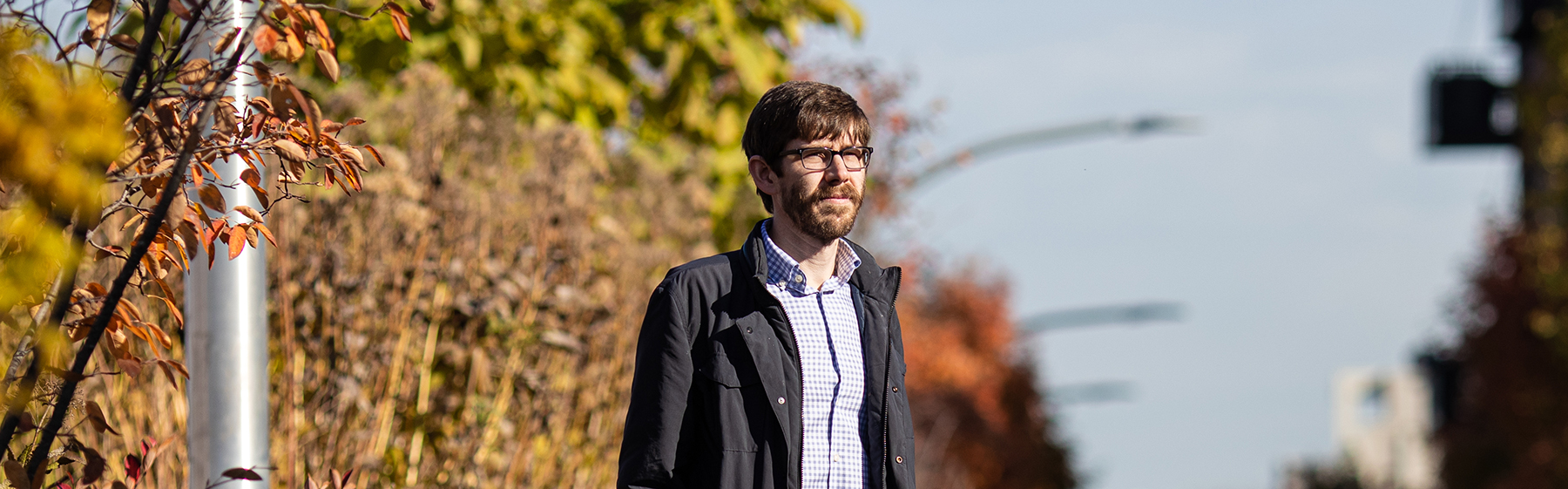
Max Melstrom, PhD, studied the value that birders place on the experience of seeing sandhill cranes.
"Birding is popular. It can be big business, and it's important to the DNR," said Melstrom. "They value birders as a constituency, and they have a responsibility to make sure that there are recreational opportunities. So now, the DNR finds itself trying to balance these potentially competing needs. And that's why they started contacting economists."
The DNR engaged Melstrom and Carson Reeling, PhD, of Purdue University's Department of Agricultural Economics, to assist in evaluating the options. Melstrom's role is to quantify the value that people place on the birding experience, particularly the opportunity to see sandhill cranes. Carson is studying the potential value of the hunting experience. By comparing their findings, they aim to inform a policy decision that balances recreational, ecological, and economic needs. In a follow-up study, Melstrom plans to examine how cranes and other birds impact agricultural production—both positively and negatively.
Fishing, pollution, and the value of cleaning up
The project on cranes is just one example of how Melstrom works to quantify the value people place on natural resources. He has also studied the changing value of recreational fisheries in the Great Lakes. That includes examining catch rates, fishing quality, and the health risks associated with toxic contamination. He wants to understand how much people value the recreational fishery, and how changing environmental conditions impact their experience.
"About 60 percent of anglers in the Great Lakes eat their catch," he says. However, many species have advisories warning people, especially children and pregnant women, to limit their consumption due to pollutants such as mercury or PCBs.
Melstrom wants to know whether these advisories lower the value of the fishing experience. If they do, it helps make a case for investing in cleanup efforts.
Along with the student research assistants he mentors, Melstrom also explores the economics of environmental restoration.
"We've looked at housing prices around polluted sites," he says, referring to a study that SES alum Emma Donnelly conducted under his guidance as a graduate student. The study evaluated the impacts of cleanup efforts in two highly contaminated areas of Lake Michigan—Waukegan Harbor and the Milwaukee Estuary. Donnelly's work showed that people tend to avoid living near contaminated areas.
"But when those areas get cleaned up, people move back in, and property values rise," said Melstrom. "I want to look at whether anglers do the same — do they return to fish in cleaner waters?"
That kind of evidence is useful for policymakers and public advocates.
"If there's a company that caused a pollution event, there's going to be a loss—an environmental loss and an economic loss. We need to be able to measure that impact in economic terms to know the extent of the harm and what relief should be provided by the offender," said Melstrom.
Why put a price on nature?
Trying to put a dollar value on nature might sound cold, but Melstrom sees it differently.
"People matter," he says. "Their values matter. There's the value of the experience, and there can be goods where there's zero expenditure attached to it and it's incredibly valuable. If we don't measure those values, they're too easy to ignore."
Melstrom's job is to capture those values in economic terms, and that goes beyond tracking the flow of money. He notes that measuring wages or market prices can only reveal part of the picture. People reveal their values not only by how they spend their money, but also by where they choose to live, or how they spend their time.
"People don't make decisions in a vacuum. They act based on the value they get from experiences. And when the environment changes—whether it's cleaner water, fewer fish, or birds avoiding their favorite park—those experiences change too."
By making those changes visible and quantifiable, Melstrom's research helps people more fully understand the trade-offs involved in environmental decisions.
As an educator, Melstrom is also training the next generation of environmental leaders. During a typical semester, he mentors three paid research assistants (two undergraduates and one graduate student) and three unpaid undergraduate interns. The students gain valuable skills that will help them shape policies and advocate for decisions that account for the full costs of ecological damage and the value of conserving and restoring natural resources.
-By Stephanie Folk
Fall 2024
Weighing conflicting interests
Melstrom's current work with the Indiana Department of Natural Resources (DNR) focuses on sandhill cranes. Conservation efforts have helped this once-threatened species make a remarkable comeback. Their numbers have grown to the point that hunters have approached the DNR about harvesting the birds. If the DNR allows hunting, the birds would likely respond by avoiding areas where they might encounter people. That would reduce opportunities for birders to see the large, impressive cranes.
"Birding is popular. It can be big business, and it's important to the DNR," said Melstrom. "They value birders as a constituency, and they have a responsibility to make sure that there are recreational opportunities. So now, the DNR finds itself trying to balance these potentially competing needs. And that's why they started contacting economists."
The DNR engaged Melstrom and Carson Reeling, PhD, of Purdue University's Department of Agricultural Economics, to assist in evaluating the options. Melstrom's role is to quantify the value that people place on the birding experience, particularly the opportunity to see sandhill cranes. Carson is studying the potential value of the hunting experience. By comparing their findings, they aim to inform a policy decision that balances recreational, ecological, and economic needs. In a follow-up study, Melstrom plans to examine how cranes and other birds impact agricultural production—both positively and negatively.
Fishing, pollution, and the value of cleaning up
The project on cranes is just one example of how Melstrom works to quantify the value people place on natural resources. He has also studied the changing value of recreational fisheries in the Great Lakes. That includes examining catch rates, fishing quality, and the health risks associated with toxic contamination. He wants to understand how much people value the recreational fishery, and how changing environmental conditions impact their experience.
"About 60 percent of anglers in the Great Lakes eat their catch," he says. However, many species have advisories warning people, especially children and pregnant women, to limit their consumption due to pollutants such as mercury or PCBs.
Melstrom wants to know whether these advisories lower the value of the fishing experience. If they do, it helps make a case for investing in cleanup efforts.
Along with the student research assistants he mentors, Melstrom also explores the economics of environmental restoration.
"We've looked at housing prices around polluted sites," he says, referring to a study that SES alum Emma Donnelly conducted under his guidance as a graduate student. The study evaluated the impacts of cleanup efforts in two highly contaminated areas of Lake Michigan—Waukegan Harbor and the Milwaukee Estuary. Donnelly's work showed that people tend to avoid living near contaminated areas.
"But when those areas get cleaned up, people move back in, and property values rise," said Melstrom. "I want to look at whether anglers do the same — do they return to fish in cleaner waters?"
That kind of evidence is useful for policymakers and public advocates.
"If there's a company that caused a pollution event, there's going to be a loss—an environmental loss and an economic loss. We need to be able to measure that impact in economic terms to know the extent of the harm and what relief should be provided by the offender," said Melstrom.
Why put a price on nature?
Trying to put a dollar value on nature might sound cold, but Melstrom sees it differently.
"People matter," he says. "Their values matter. There's the value of the experience, and there can be goods where there's zero expenditure attached to it and it's incredibly valuable. If we don't measure those values, they're too easy to ignore."
Melstrom's job is to capture those values in economic terms, and that goes beyond tracking the flow of money. He notes that measuring wages or market prices can only reveal part of the picture. People reveal their values not only by how they spend their money, but also by where they choose to live, or how they spend their time.
"People don't make decisions in a vacuum. They act based on the value they get from experiences. And when the environment changes—whether it's cleaner water, fewer fish, or birds avoiding their favorite park—those experiences change too."
By making those changes visible and quantifiable, Melstrom's research helps people more fully understand the trade-offs involved in environmental decisions.
As an educator, Melstrom is also training the next generation of environmental leaders. During a typical semester, he mentors three paid research assistants (two undergraduates and one graduate student) and three unpaid undergraduate interns. The students gain valuable skills that will help them shape policies and advocate for decisions that account for the full costs of ecological damage and the value of conserving and restoring natural resources.
-By Stephanie Folk
Fall 2024